
The Candorly Assessment offers clients insights into their workplace behaviors, strengths, and growth areas. As a coach, you help them interpret feedback, create action plans, and foster a growth mindset. Note: This guide assumes you received the report but weren't involved in its creation.
Preparing for the Coaching Conversation
Review the Report & Identify Key Themes
Read the participant's feedback report in full. Look for trends: strengths, growth opportunities, and gaps between self-perception and peer feedback (Perception Delta). This gap is key to unlocking self-awareness.
Frame Positively:
Reinforce that feedback is a tool for development, not judgment.
Structuring the Discussion
Set Expectations
Start with why feedback matters: It's a resource for growth, not performance management. Some participants may need help connecting feedback to behavioral change—remind them that strong leadership drives innovation, productivity, and business success.
Provide a Brief Overview
Spend a minute explaining the report structure and scoring system.
Explore Initial Thoughts
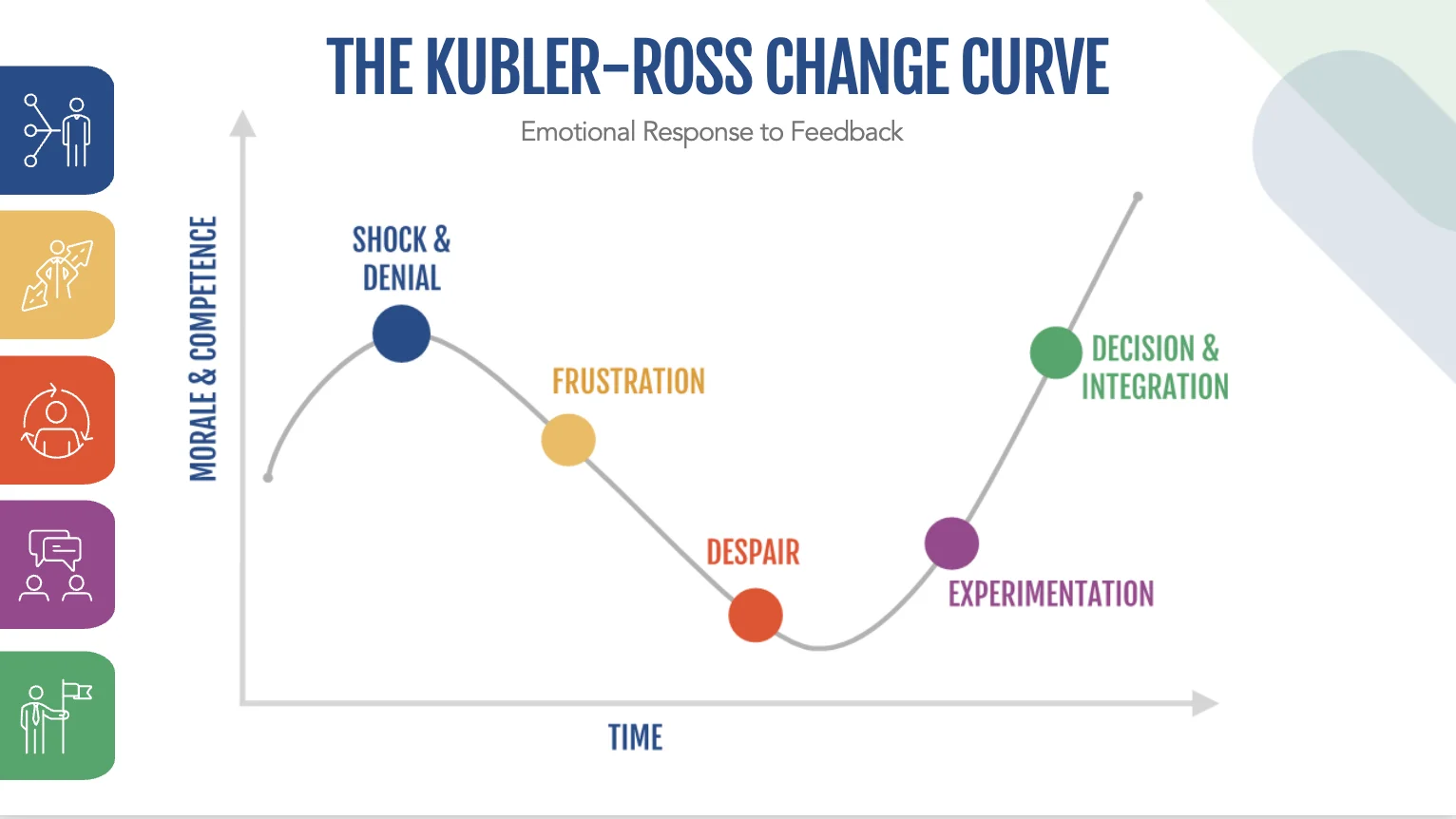
Ask how they felt reading the report. Many will go through emotional stages (Kubler-Ross Change Curve). Normalize this as part of human nature.
Acknowledge Strengths & Growth Areas
- Reinforce what they do well.
- Use open-ended questions to explore feedback constructively (e.g., "What patterns do you notice?" "What surprised you?").
Highlight the Perception Delta
Self-awareness is the foundation of leadership. Candorly's Perception Delta—the gap between a participant's self-score and their average feedback score—offers valuable insights into how participants see themselves versus how others perceive them. Make this a key part of your report discussion. Look for trends in their perception gap:
- Do certain areas show a significantly larger or smaller gap in self-awareness?
- Do they consistently rate themselves higher or lower than their feedback providers?
Encourage Reflection
Ask the client to summarize key takeaways and their initial reactions.
Creating an Action Plan
Prioritize & Plan
- Focus on one to two key areas. Encourage small, manageable steps rather than overwhelming change.
- Align feedback with specific actions and practical behaviors (e.g., "To improve communication, I will seek clarification before assuming").
- Action planning in the first session will remain high-level as participants process the report. If there's follow up coaching, a larger percentage of time will be spent on action planning.
Build Accountability
Discuss progress measurement and who can support them.
Reinforcing a Growth Mindset
Normalize Feedback
Remind clients that constructive feedback is common for all professionals and an opportunity for growth. Moreover, as one grows as a leader, it's a rare learning opportunity many professionals never get.
Reframe Challenges
Shift from "I'm bad at this" to "This is a skill I can develop."
Encourage Ongoing Reflection
Suggest follow-ups like coaching, journaling, or peer discussions.
Next Steps & Follow-Up
Schedule a Follow-Up Coaching Session
Frame the initial report debrief as the first step in a three-phase process: insight, action, and accountability.
Session 1: Insight – Focus on the participant's initial reaction to the report and key themes and learning opportunities.
Session 2: Action – With time to reflect, this session shifts to helping develop specific behaviors to test in real-world scenarios. Coaches can help participants refine their plans, consider possible outcomes, and clarify what they hope to gain from these changes.
Session 3: Accountability – Participants reflect on their behavior experiments, what they learned, and how to sustain lasting change. This session also helps them plan for long-term accountability and support.
Offer Additional Resources: Recommend articles, books, or training aligned with their goals.
Final Thought
Your role as a coach is to foster curiosity, self-awareness, and action. Guide participants to embrace feedback, experiment with new behaviors, and take ownership of their development. Meaningful change happens through continuous learning and accountability—your coaching makes that possible.